Senate to Decide on State Police, Electoral Offences Commission, Independent Candidacy, others on Wednesday

Senate to Decide on State Police, Electoral Offences Commission, Independent Candidacy, others on Wednesday
By Ndukaku Ihe
The Nation stands on the threshold of one of the most significant constitutional transformations since the return to democratic rule in 1999 as the Senate prepares to vote on a sweeping package of constitutional amendment bills that could fundamentally alter the nation’s security architecture, electoral system, governance structure, human rights framework and traditional institutions on Wednesday.
The core issues in the historic constitutional alteration exercise is the long-debated proposal for the establishment of State Police Services, a measure many security experts and political leaders believe could redefine the country’s response to rising insecurity, banditry, terrorism, kidnapping and communal conflicts.
However, the State Police proposal is only one of several far-reaching amendments before lawmakers.
AbeyaNews reports that also awaiting Senate consideration are proposals to: place the Armed Forces of the Federation on a constitutional “first-line charge,” guaranteeing direct access to funding from the Consolidated Revenue Fund; grant constitutional recognition and financial autonomy to traditional rulers through the establishment of State Councils of Traditional Rulers; introduce independent candidacy for governorship, legislative and local government elections; and establish a constitutionally-backed Electoral Offences Commission to investigate and prosecute election-related crimes.
The Lawmakers will also consider a constitutional amendment requiring courts to automatically commute death sentences imposed on pregnant women to life imprisonment where pregnancy is established to the satisfaction of the court.
Another controversial proposal seeks to outlaw the public parade of criminal suspects by law enforcement agencies, declaring the practice a form of “inhuman and degrading treatment” and strengthening the constitutional presumption of innocence.
The constitutional review package further contains reforms aimed at strengthening local government autonomy, expanding children’s rights protections, improving the independence of electoral institutions, devolving more powers to states, enhancing fiscal accountability, and granting greater constitutional backing to key democratic institutions.
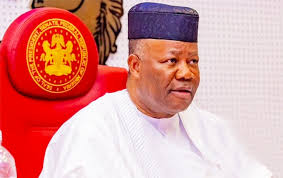
Beckoning on his colleagues during Tuesday’s emergency plenary session, Senate President Godswill Akpabio urged senators to ensure full attendance during Wednesday’s plenary, emphasizing that constitutional amendments require broad legislative participation and support.
Describing the State Police proposal as a landmark reform, Akpabio said Nigeria was at a defining moment in its democratic evolution.
“Since 1960, Nigeria has not had the courage to decentralise policing, and this is the first time,” he said.
The Senate President argued that local communities, traditional rulers, youth leaders and grassroots stakeholders are often better positioned to identify criminal elements and provide actionable intelligence than a centralized policing system headquartered in Abuja.
Senate Leader Opeyemi Bamidele also stressed the importance of attendance, noting that constitutional amendments require the support of at least two-thirds of lawmakers.
The bills, if eventually approved by both chambers of the National Assembly and ratified by at least 24 state Houses of Assembly, would represent one of the most comprehensive constitutional overhauls in Nigeria’s democratic history.
STATE POLICE: THE BIGGEST SECURITY REFORM SINCE INDEPENDENCE
The most prominent proposal seeks to establish state-controlled
police services alongside the existing federal police structure.
Proponents are of the opinion that governors, local authorities, traditional rulers and community leaders understand their environments better and can respond more effectively to security threats.
The proposal is expected to create constitutional backing for state police while subsequent legislation would establish safeguards against political abuse and operational excesses.
Advocates believe the reform could significantly improve intelligence gathering, community policing and rapid response to crimes such as kidnapping, banditry, terrorism and communal violence.
If approved, it would amount to the most significant restructuring of Nigeria’s policing framework since independence.
ELECTORAL REFORMS: MAJOR SHAKE-UP OF NIGERIA’S ELECTION SYSTEM
Several amendments seek to transform the country’s electoral process.
INDEPENDENT CANDIDACY
One proposal would allow Nigerians to contest elections without belonging to political parties.
Under the bill:
Governorship candidates must secure verified signatures from at least 10 percent of registered voters across two-thirds of local governments.
Senatorial and House of Representatives candidates must obtain signatures from 10 percent of registered voters spread across two-thirds of local governments in their constituencies.
State Assembly candidates must obtain signatures from 10 percent of voters across two-thirds of wards.
Local government candidates would face similar thresholds.
INEC would be responsible for verifying all signatures.
Women seeking office as independent candidates would enjoy a 50 percent reduction in administrative fees.
Strengthening State Electoral Commissions
The amendment also seeks to strengthen State Independent Electoral Commissions (SIECs) by:
Requiring members to be non-partisan individuals of unquestionable integrity.
Introducing age requirements.
Removing excessive gubernatorial control over SIEC internal procedures.
Enhancing institutional independence in conducting local government elections.
Electoral Offences Commission
One of the most consequential reforms is the creation of an independent Electoral Offences Commission.
The proposed commission would:
Investigate electoral crimes.
Prosecute offenders.
Combat vote-buying, ballot snatching and election fraud.
Operate independently of political influence.
Receive funding directly from the Consolidated Revenue Fund.The commission would consist of a chairman and twelve commissioners and enjoy constitutional protection similar to other major national institutions.
JUDICIAL REFORMS: STRENGTHENING JUSTICE DELIVERY
The constitutional review package includes reforms intended to strengthen judicial independence, improve efficiency and reduce delays in the administration of justice.
Lawmakers are considering measures that would:
Enhance judicial autonomy.
Improve appointment processes.
Strengthen access to justice.
Modernize court administration.
Reduce political interference in judicial operations.
The broader objective is to build public confidence in the judiciary while accelerating the resolution of legal disputes.
LOCAL GOVERNMENT REFORMS: EXPANDING GRASSROOTS AUTONOMY
The amendment package seeks to deepen local government autonomy and reduce dependence on state governments.
Supporters argue that local governments have remained financially vulnerable due to excessive state-level control.
The reforms aim to:
Strengthen direct access to statutory allocations.
Improve grassroots governance.
Enhance accountability.
Reduce administrative bottlenecks.
Promote local development.
HUMAN RIGHTS REFORMS: END TO SUSPECT PARADING AND NEW PROTECTIONS FOR CHILDREN
Perhaps among the most notable human rights proposals is a bill seeking to outlaw the public parade of suspects.
Public Parade of Suspects Declared Unconstitutional
The amendment seeks to classify the public display of arrested persons before trial as a form of “inhuman and degrading treatment.”
If passed:
Police and other law enforcement agencies could no longer publicly display suspects before conviction.
Citizens whose rights are violated may seek constitutional remedies.
The presumption of innocence would receive stronger constitutional protection.
Legal experts have long criticized the practice, arguing that it damages reputations and prejudices fair trial rights.
Expanded Child Rights
Another proposal introduces robust constitutional protections for children.
Key provisions include:
Making the best interests of the child a constitutional principle.
Guaranteeing protection against abuse and exploitation.
Expanding access to child-sensitive justice.
Promoting rehabilitation rather than punishment for juvenile offenders.
Prohibiting death sentences and irreversible life imprisonment for offences committed by persons below 18 years.
Pregnant Women and Death Sentences
A particularly significant amendment seeks to protect unborn children.
Under the proposal:
“Where a pregnant woman is convicted of an offence punishable by death and it is proved to the satisfaction of the court that she is pregnant, the court shall sentence her to life imprisonment.”
The measure would automatically commute death sentences to life imprisonment for pregnant convicts.
DEVOLUTION OF POWERS: PUSHING NIGERIA TOWARDS TRUE FEDERALISM
The constitutional review process also seeks to transfer more powers from the Federal Government to states.
The objective is to:
Reduce over-centralization.
Empower states.
Improve service delivery.
Encourage economic competitiveness.
Advance true federalism.
Several responsibilities currently on the Exclusive Legislative List may eventually be moved to the Concurrent Legislative List.
FISCAL REFORMS: NEW APPROACH TO PUBLIC FINANCE
The proposed amendments contain provisions aimed at improving transparency, efficiency and accountability in public finance.
Among the most significant is a proposal granting financial autonomy to the Armed Forces.
Financial Independence for the Military
The bill seeks to place military funding on a “first-line charge” basis.
This means funding for the Armed Forces would come directly from the Consolidated Revenue Fund, similar to:
INEC
The Judiciary
The National Assembly
Supporters are of the opinion that this would eliminate delays in defense funding and improve operational readiness.
STRENGTHENING INSTITUTIONS
Several amendments seek to strengthen the independence and effectiveness of key national institutions.
The objective is to:
Reduce executive interference.
Improve accountability.
Strengthen anti-corruption frameworks.
Enhance institutional credibility.
Guarantee operational independence.
The Electoral Offences Commission is among the most prominent examples of this approach.
TRADITIONAL INSTITUTIONS TO RECEIVE CONSTITUTIONAL RECOGNITION
One of the most groundbreaking proposals seeks to formally integrate traditional rulers into Nigeria’s constitutional framework.
Creation of State Councils of Traditional Rulers
The amendment would establish a constitutionally recognized State Council of Traditional Rulers in every state.
The councils would advise governors on:
Customary laws.
Chieftaincy matters.
Cultural affairs.
Inter-communal relations.
Public order and peace-building.
Direct Funding for Traditional Councils
Perhaps even more significant is a proposal requiring states to allocate at least five percent of local government funds directly to traditional councils.
The amendment specifically seeks to bypass administrative interference by state governments and local government chairmen through direct payment mechanisms.
Supporters argue that this would provide traditional institutions with stable funding for peacebuilding, dispute resolution, cultural preservation and community development.
INCLUSIVE GOVERNANCE AND CITIZENSHIP
Lawmakers are also considering reforms aimed at broadening participation in governance.
The proposals seek to:
Increase opportunities for women.
Expand youth participation.
Improve representation for persons with disabilities.
Address citizenship and residency-related concerns.
Promote national integration.
The 50 percent fee waiver for female independent candidates forms part of this broader inclusion agenda.
THE LEGISLATURE
The constitutional review package also contains provisions affecting the operations of both the National Assembly and State Houses of Assembly.
The reforms seek to improve legislative effectiveness, strengthen institutional independence and enhance oversight responsibilities.
A DEFINING MOMENT FOR NIGERIA
Wednesday’s vote represents far more than a routine constitutional exercise.
At stake are fundamental questions concerning security, democracy, human rights, local governance, fiscal accountability and the future structure of the Nigerian federation.
Should lawmakers approve the amendments and secure subsequent ratification by at least 24 state Houses of Assembly, Nigeria could witness its most comprehensive constitutional transformation since the advent of the Fourth Republic in 1999.