Nigerian hospitals now where people go to die—-Anglican Primate
By Ndukaku Ihe
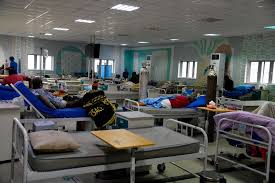
Dissatisfied with the deplorable state of Nigerian healthcare facilities, the Primate, Church of Nigeria (Anglican Communion), Most Rev’d Henry Ndukuba, has described hospitals in the country as places where people now go to die.
The Primate, in his address at the second edition of the Church of Nigeria Health Summit for the church members in health care, in Abuja, on Tuesday, decried the pathetic state of Nigerian hospitals including private and public, regretting that the situation is not because of a lack of medical knowledge, but due to the absence of compassion and ethics.
He wondered that in some cases, critical and emergency patients who need a simple life-saving intervention are abandoned or made to pay before they are treated, thereby violating both the Hippocratic Oath and the law of Christ.
“Sadly, the once noble image of the medical profession has been marred by false diagnoses, extortionate billing, counterfeit drugs, lack of accountability, and poor patient care”, he added.
He disclosed plans to establish the Church of Nigeria Health Maintenance Organization (HMO) as well as the Church of Nigeria Health Professionals Guild to provide a coordinated health care services for members.
“The Church must not only complement the efforts of the government but must be the alternative of the best for the people. This informed the initial task given to this Summit in the maiden edition last year. We need a coordinated effort at all levels and by all in this task.
“A comprehensive survey of all our Anglican-owned health facilities in the country will help us in harnessing our resources to tackle the enormous health care challenges. Sadly, the Church in Nigeria is still absent in pharmacology and pharmaceutical services, unlike the ECWA church.
“In this decade of God’s reign, as a church, we strongly encourage parishes, dioceses, and provinces to establish, administer, and strengthen healthcare facilities and medical missions. We need to explore the training of health professionals, pharmaceutical production, and research laboratories.
“We expect this conference to look at some of these issues and right from the onset, determine the areas we have comparative advantage and which will be most effective and efficient for the citizens. There is a need to harness our members who are healthcare professionals to serve God with us.
“The Church of Nigeria will need to explore healing and healthcare as a tool for evangelism and mission. Moreso, this Summit should chart a way forward for our effective involvement in health care delivery in our nation.
“Ultimately, we hope that this year’s conference will build on the gains of last year’s conference, setting out clear policy statements, standards, and quality control for standardization, coordination of mission-driven, compassionate, and efficient healthcare delivery within the Anglican Communion.”
He was optimistic that the second edition of the Health Summit will serve as a rescue mission and a divinely guided agent of paradigm shift in healthcare delivery in Nigeria. “Therefore, as christian medical practitioners, you are called to a higher standard, not just the Hippocratic Oath, but the Law of Christ.
“We request that each of you enlist in all your diocesan health care programmes and offer assistance in your diocesan-owned health facilities for efficient service that bear witness to Jesus Christ, the Great Physician. As a church, we are called to provide good health services where the government fails, promotes health education and hygiene, and addresses corruption in the healthcare system.”
Chairman of the Occasion, Dr. Amal Pepple, in her remarks, noted that Nigeria faces numerous social development issues, one of which is a lack of affordable, equitable, efficient, and accessible healthcare.
“It is well known that our country has some of the poorest health indices among the nations
of the world”, he said.
She maintained that the social health insurance scheme remains one of the most cost-effective, efficient, equitable, and sustainable means of financing health care, but it has not yet had the desired impact in Nigeria.
She noted that another troubling development in Nigeria’s health sector is the unrestrained emigration of skilled health workers to foreign countries, thus depleting available human resources for health and worsening the health manpower crisis.
Chairman of National Health Insurance Authority (NHIA), Senator Ibrahim Oloriegbe, in his remarks, commended the decision of the Church of Nigeria to establish a Health Maintenance Organization (HMO), stressing that it will offer the needed opportunity for the church to provide health care for the people.